Table of Contents
“A gaming marketing agency should start by identifying the real marketing problem before adding more traffic, ads, or content, using audience insights, search intent, landing-page performance, player-journey data, and campaign results to choose the right strategy.”
A gaming marketing agency can help your brand reach the right players and turn interest into action. But before you spend more on ads or content, ask: Are you solving the right marketing problem?
More traffic, ads, or posts will not fix the wrong audience, weak messaging, or poor search strategy.
The real first step is finding what is holding your marketing back.
Start by Finding the Real Marketing Problem

A gaming marketing agency can use SEO, paid ads, content, social media, and audience research. But using more channels does not always solve the real problem.
Low traffic? The issue may be weak SEO or poor content, not a lack of ads. Low conversions? The problem may be your landing page or call to action, not your traffic.
The key is to find the real problem before changing your strategy.
Look Beyond the Surface
A strong marketing strategy should ask why a result is happening. Instead of asking:
- How can we get more traffic?
- How can we get more clicks?
- How can we get more impressions?
Ask:
- Are we reaching the right audience?
- Does our message match what players want?
- Does the website support the campaign?
- Are we targeting the right search terms?
- Where are potential players leaving?
These questions can reveal problems that basic campaign numbers may hide.
More Traffic May Not Solve the Problem
A gaming marketing agency should look beyond traffic when reviewing campaign results. More visitors do not always mean better results.
Your website may attract people who are not interested in the game. This can increase costs without improving conversions.
Focus on traffic quality, not just volume. Check where visitors come from, what they search for, which pages they view, and what they do next.
Look Beyond the Click
Getting a click is only the first step. What happens after it matters.
Can visitors quickly understand the game? Can they find the information they need? Is the next step clear? Does the page work well on mobile?
If people click but leave quickly, more traffic may not fix the problem. Find out why visitors leave before spending more to bring in new ones.
Check If You Are Reaching the Right Audience
A campaign can reach thousands of people and still miss the audience that matters.
Gaming audiences have different interests, habits, platforms, and reasons for playing. A broad campaign may create attention without creating strong interest.
A better strategy starts with a clear understanding of the target player. Consider:
- Game type and category
- Player interests
- Platform preferences
- Location
- Search behavior
- Buying or engagement intent
- Stage in the player journey
Avoid Marketing to Everyone
Trying to reach everyone can make your message too general.
A focused audience gives you a better base for your content, advertising, SEO, and creative strategy.
The goal is not to reach the largest possible audience. The goal is to reach people who are relevant to your game.
Your Message Could Be Holding You Back
Sometimes the audience is right, but the message fails to create interest.
Players need a clear reason to learn more about a game. If your marketing only lists features without showing why they matter, the message may not connect with the audience.
Your message should also match across your main marketing channels.
If an ad makes one promise but the landing page focuses on something else, the user may lose interest.
Make the Value Clear
Strong gaming marketing should quickly answer important questions:
- What is the game?
- Who is it for?
- What makes it worth trying?
- What should the player do next?
Clear messaging can help reduce confusion and create a stronger path from awareness to action.
Review Your Landing Page Before Spending More
A campaign may attract the right audience and still produce weak results if the landing page does not support the campaign.
Common problems include:
- Slow page speed
- Poor mobile experience
- Unclear calls to action
- Too much information
- Weak page structure
- Poor match between ad and landing page
- Missing information that users need
These problems can create a gap between interest and action.
Match the Page to the Campaign
The landing page should support the reason a visitor arrived.
If someone clicks an ad about a specific game, the page should make it easy to understand that game and take the next step.
Do not make visitors search for basic information.
A good campaign needs a good destination.
Use SEO to Understand What Players Want
SEO is not only about rankings. It can also help gaming brands understand what people are looking for.
Search terms can reveal questions, interests, and problems that matter to your audience.
A strong SEO strategy can examine searches related to:
- Game categories
- Gameplay
- Platforms
- Game features
- Reviews
- Comparisons
- Related topics
Match Content With Search Intent
A gaming marketing agency should create content based on search intent, not just keywords. The content should match what users want to find, whether they need information, want to compare options, or are ready to act.
Search intent should guide your content strategy. It helps connect SEO, content, and marketing goals while giving users more useful answers.
Stop Treating Every Channel as Separate
A gaming marketing agency can connect SEO, paid ads, content, and social media to create a stronger strategy. Each channel has a different role, but they can also support each other.
Search data can guide content, paid ads can reveal audience interests, and social media can show which messages get attention. Reviewing these insights together can help improve your overall marketing strategy.
Look for Shared Insights
Instead of asking which channel is the best, ask what each channel is teaching you.
Marketing channels should create learning, not just activity. This wider view can help teams make better decisions about future campaigns.
Measure What Connects to Your Goal
A major marketing mistake is focusing on metrics that look good but do not explain business results.
Impressions can show reach. Clicks can show interest. Engagement can show activity.
But these numbers do not always tell you whether the campaign is moving toward its main goal.
Depending on the campaign, useful metrics may include:
- Qualified traffic
- Sign-ups
- Downloads
- Conversion rate
- Cost per acquisition
- Player retention
- Revenue-related actions
- Return on ad spend
Choose Metrics Based on the Goal
There is no single metric that works for every gaming campaign. If the goal is awareness, reach and engagement may matter more.
If the goal is acquisition, conversions and acquisition costs may be more useful. If the goal is retention, repeat activity may provide better insight.
Measure the result you actually want, not just the number that is easiest to report.
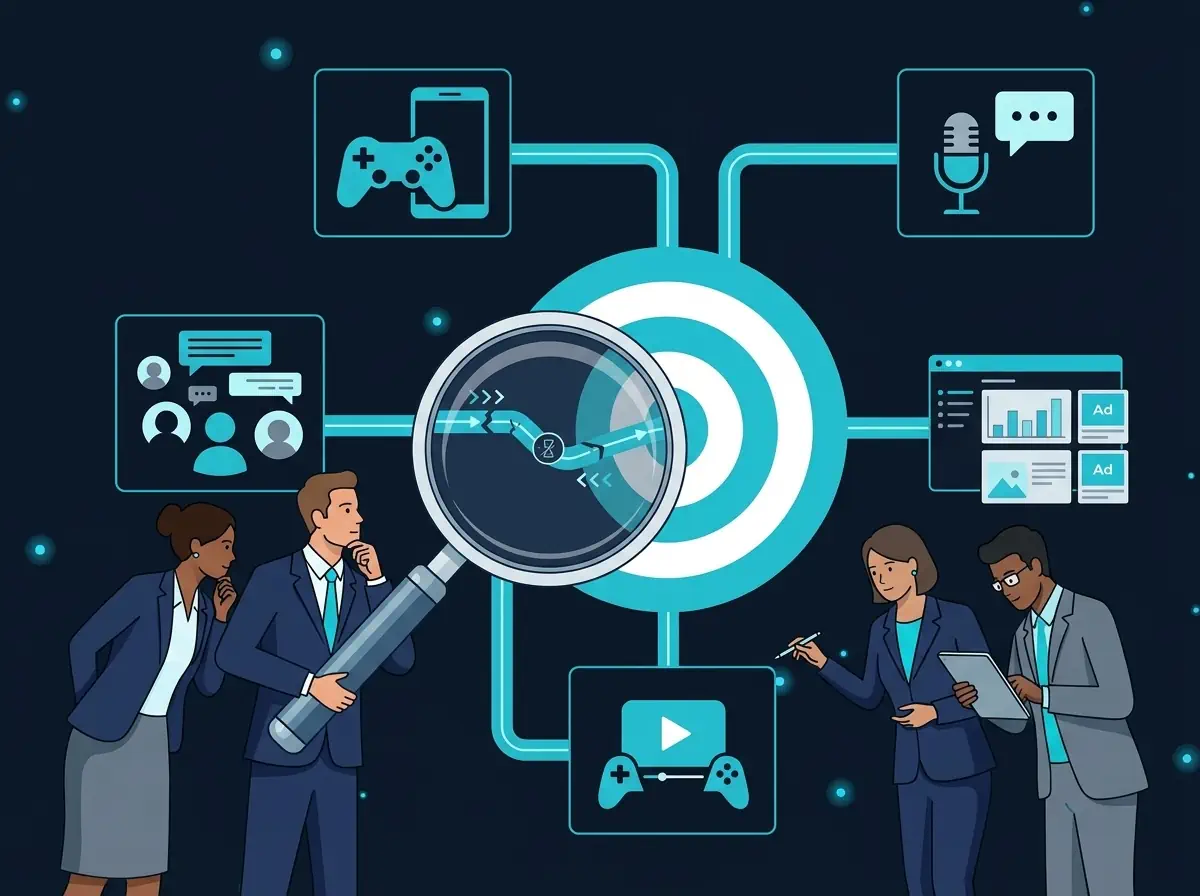
Find Where the Player Journey Breaks
Think about the full journey:
Awareness → Search → Visit → Interest → Action → Continued engagement
A gaming marketing agency should look at the full player journey, not just traffic.
If players do not see your game, you may have a visibility issue. If they see it but do not click, your message may need work.
If they click but leave, check your landing page. If they take action but do not return, focus on retention.
Find where the problem starts before changing your strategy.
Use Data Before Making Major Changes
Before replacing a campaign or increasing a budget, review the available data. Look for patterns across:
- Audience groups
- Search terms
- Campaigns
- Landing pages
- Devices
- Locations
- Conversion points
Data does not answer every question, but it can show where further investigation is needed.
Test Before You Scale
Large changes can make it harder to understand what caused an improvement or decline.
Where possible, test changes in a controlled way. Compare results and use the findings to guide the next step.
Scale what the data supports, not what simply looks promising.
How PPlayez Approaches Gaming Marketing
PPlayez, a gaming marketing agency, focuses on SEO, content, paid ads, and player-focused strategies. Instead of using every channel, the focus should be on solving the right marketing problem.
Weak visibility may need better SEO and content. Poor targeting may require audience research. Low conversions may point to problems in the user journey.
The right strategy depends on the game, audience, market, and growth goals.
Build Your Strategy Around the Problem
Before taking action, identify what is actually going wrong.
- Low traffic? Check visibility and search intent.
- Low engagement? Review the audience and message.
- Low conversions? Examine the landing page and user journey.
- High acquisition costs? Review targeting, channels, and conversion performance.
- Weak retention? Look beyond acquisition and study what happens after the first action.
The solution should match the problem.
Fix the Right Problem First
A gaming marketing agency should solve the right problem, not just add more marketing.
More ads will not fix the wrong audience. More traffic will not fix a weak landing page. More content will not fix poor search intent.
Start with the real problem. Check your audience, player journey, data, and message before changing your strategy.
When you know what is holding your marketing back, you can choose the right channel, reduce wasted effort, and focus on what can move your gaming brand forward.
FAQs About Gaming Marketing
1. What does a gaming marketing agency do?
A gaming marketing agency helps gaming brands reach the right players through SEO, ads, content, and other digital strategies.
2. Why is audience targeting important?
The right audience can improve engagement and campaign results. It also helps reduce wasted marketing spend.
3. Why do gaming ads get clicks but few players?
The problem may be poor targeting, weak messaging, or a poor landing page. More clicks will not fix these issues.
4. How does SEO help gaming brands?
SEO helps gaming brands appear for relevant searches and create content that answers what players want to know.
5. What should you check before increasing ad spend?
Check your audience, campaign data, landing page, search intent, and conversions first. More spending will not fix a weak strategy.