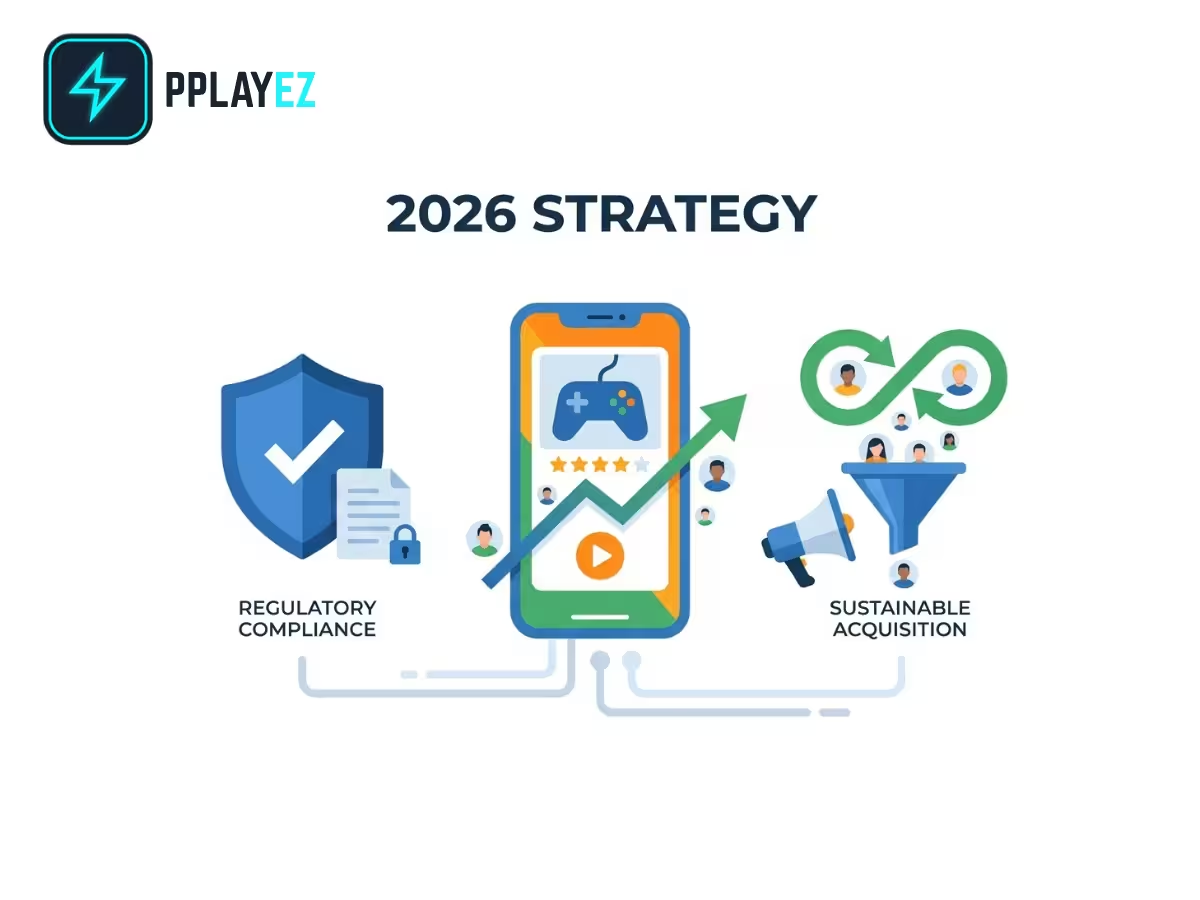
A mobile game advertising strategy in 2026 is a multi-channel player acquisition framework combining compliant programmatic media, app-store indexing, technical SEO, and Answer Engine Optimization (AEO). For PAGCOR-licensed e-games operators and platform aggregators, this integrated approach bypasses volatile ad bans, lowers First-Time Deposit (FTD) acquisition costs, and captures high-intent mobile players across search and AI engines.
The Philippine and Southeast Asian e-games sector operates on mobile-first traffic, yet acquiring profitable mobile players has never been more volatile. Strict app store restrictions, aggressive programmatic ad-network bans, and rising Customer Acquisition Costs (CAC) across paid social networks have eroded margins for operators relying solely on paid media bursts. Meanwhile, Search Engine Results Pages (SERPs) and generative AI platforms have become primary discovery gateways where high-intent players research licensed platforms before committing real deposits.
Executing a durable mobile game advertising strategy requires moving beyond isolated ad buying toward an integrated, regulation-first acquisition engine. Operators and white-label partners cannot afford suspended ad accounts, non-compliant creative penalties, or fragmented mobile funnels that leak deposits at checkout. This guide breaks down the technical architecture, regulatory guardrails, on-page conversion mechanics, and authority signals required to scale mobile player volume sustainably in 2026.
What Is a Mobile Game Advertising Strategy?
A mobile game advertising strategy is the structured alignment of paid acquisition channels, organic mobile search visibility, app-store optimization, and conversion engineering designed to attract, onboard, and retain mobile players. Within the regulated e-games and real-money gaming vertical, this discipline extends far beyond standard mobile app install campaigns. It operates inside strict regulatory frameworks—such as PAGCOR licensing mandates in the Philippines and regional advertising codes across Southeast Asia—where every ad creative, landing page, and affiliate placement is scrutinized for age gating, responsible gaming disclosures, and accurate payout representations.
This strategic framework directly impacts four core segments of the gaming ecosystem: licensed online e-games operators managing direct-to-player brands, mobile-first casino and sportsbook founders scaling real-money apps, platform aggregators distributing third-party game titles, and white-label marketing agencies managing multi-brand portfolios. Rather than treating paid ads and organic search as separate silos, a modern mobile strategy uses paid channels for rapid audience testing while building permanent organic and AI citation equity that compounds player volume without perpetual media spend.
Traditional Marketing/SEO vs. Mobile Game Advertising Strategy in iGaming
Standard mobile gaming studios can launch aggressive user acquisition campaigns across Meta, TikTok, and Google App Campaigns within hours, optimizing purely for cost-per-install (CPI). Regulated e-games operators face an entirely different operational reality where standard growth playbooks trigger immediate account suspensions, domain blacklisting, and regulatory sanctions.
1. Legal and PAGCOR Compliance Considerations
Standard consumer mobile apps rarely require government gaming licenses to purchase media or rank for commercial keywords. In contrast, regulated e-games platforms in the Philippines must embed verifiable PAGCOR license credentials, 21+ age restrictions, and responsible gaming notices directly into ad creatives and mobile landing pages. Omitting mandatory compliance disclaimers not only risks regulatory fines and license suspension but also disqualifies domains from Google’s certified gambling advertising programs.
2. Strict Advertising, Platform, and Link Policies
Mainstream mobile games enjoy frictionless access to major ad exchanges, affiliate networks, and editorial press coverage. Real-money e-games operators must navigate strict whitelisting protocols, pre-approved creative reviews, and domain-level compliance audits before running a single impression on Google Ads or programmatic display networks. Similarly, editorial publishers apply heightened scrutiny to outbound links pointing to gaming domains, requiring legitimate corporate entities and transparent brand governance.
3. Keyword, Messaging, and Content Restrictions
Conventional mobile marketing relies heavily on aggressive promotional hooks, urgency triggers, and exaggerated reward claims to maximize click-through rates. Regulated gaming advertising prohibits misleading bonus guarantees, “risk-free” betting language, or messaging that targets vulnerable demographics. Effective campaigns must balance high-converting player incentives with transparent wagering terms, clear payment mechanics, and educational content that satisfies both platform reviewers and discerning players.
4. Higher Competition and Authority Barriers
In casual mobile gaming, a well-funded ad campaign can quickly capture market share regardless of domain age or organic authority. In the iGaming vertical, well-capitalized incumbents, established affiliate portals, and aggressive offshore competitors dominate high-intent mobile search queries. Breaking into top organic positions and AI-generated recommendations requires deep technical architecture, localized payment trust signals, and sustained authority building rather than short-term media spend.
Winning Mobile Game Advertising Strategy: The Technical & Strategic Foundation
Sustainable mobile acquisition begins beneath the ad creative, inside the technical infrastructure of the gaming platform itself. At PplayEZ, our Triple E Ranking Strategy (Engineered, Executed, Elevated) establishes that technical precision filters out weak platforms before a single peso or dollar is spent on traffic. When a mobile user clicks an ad or search result, sub-second performance and seamless verification determine whether that click converts into a funded account.
1. Site Speed & Mobile-First Optimization
Mobile e-games players in Southeast Asia frequently access platforms over variable 4G and 5G cellular connections on mid-range Android and iOS devices. Heavy JavaScript game lobbies, unoptimized hero banners, and bloated third-party tracking scripts inflate Largest Contentful Paint (LCP) beyond 4 seconds, causing immediate bounce rates above 60%. Operators must strip render-blocking scripts from landing pages, serve next-gen WebP/AVIF visual assets, and isolate heavy WebGL game containers until after user authentication.
2. Indexing & Crawlability for Dynamic Platforms
Modern mobile gaming platforms rely heavily on Single Page Applications (SPAs), dynamic game lobbies, and geo-fenced routing that frequently confuse search engine crawlers. If Googlebot encounters a blank JavaScript shell or an aggressive geo-redirect loop, critical game category pages and promotional hubs never enter the index. Implementing dynamic server-side rendering (SSR) for public acquisition pages ensures search crawlers and AI bots parse clean HTML while preserving fast client-side gameplay for logged-in users.
3. Structured Data & AIEO/GEO Readiness
Search engines and generative AI platforms like Google AI Overviews, ChatGPT, and Perplexity rely on explicit entity relationships to recommend legitimate gaming platforms. Implementing comprehensive JSON-LD schema—including Organization, SoftwareApplication, FAQPage, and Review markup—anchors the brand as a verified, licensed entity. Clear semantic HTML headings and concise factual summaries allow AI answer engines to extract accurate platform details when players ask for trusted mobile e-games providers.
4. Security & Local Payment Trust Signals
Mobile players abandon registration funnels the moment payment friction or security ambiguity appears. A high-converting mobile architecture highlights end-to-end SSL encryption, two-factor authentication (2FA), and instant local payment integrations—such as GCash, Maya, QRPh, and direct local bank transfers—above the fold. Displaying clear deposit/withdrawal processing times and verified payment badges directly reinforces platform legitimacy for both users and automated quality raters.
5. Localization & Multi-Market Architecture
Operating across the Philippines and neighboring Southeast Asian markets requires disciplined internationalization rather than generic English templates. Platforms targeting multi-jurisdiction traffic must deploy precise hreflang annotations, localized currency formatting, and culturally resonant UX flows tailored to regional mobile habits. Clean subfolder architectures (e.g., /ph/, /th/, /vn/) consolidate domain authority while isolating jurisdiction-specific compliance disclosures and payment gateways.
Content, Conversion & On-Page Optimization for Gaming Operators
Driving mobile traffic to a generic homepage wastes acquisition budget; high-performing campaigns map specific player intent directly to tailored, compliance-cleared conversion environments. Aligning PAGCOR-compliant messaging with granular search and ad-group intent turns passive mobile browsers into active depositors.
1. Keyword & Intent Research
Effective mobile gaming keyword research separates broad entertainment curiosity from high-value transactional intent. Rather than competing exclusively on expensive head terms like “online casino,” operators should capture mid- and bottom-funnel queries centered on specific mobile mechanics, game genres, and local payment compatibility (e.g., “PAGCOR licensed e-games app GCash deposit”). Grouping keywords by player motivation—bonus hunters, fast-withdrawal seekers, and specific slot or live-dealer enthusiasts—enables precision ad copy and landing page alignment.
2. Funnel & Search Intent Mapping
Every acquisition touchpoint must match the user’s exact stage in the decision journey to prevent funnel leakage:
- Top-of-Funnel (Informational): Game rules, RTP (Return to Player) explanations, and mobile app installation guides that capture early research traffic.
- Mid-of-Funnel (Commercial Investigation): Platform safety comparisons, payment speed breakdowns, and mobile UX walkthroughs that build brand preference.
- Bottom-of-Funnel (Transactional): Streamlined mobile registration pages, transparent welcome bonus breakdowns, and direct app-download portals engineered for rapid KYC completion.
3. Internal Linking & Topic Clusters
Search engines evaluate topical authority by examining how thoroughly a domain covers its vertical and how logically pages connect. Operators should structure content into interconnected topic clusters—linking high-authority pillar guides on mobile e-games safety directly to specific game category pages, payment tutorials, and promotional hubs. Descriptive, intent-rich anchor text distributes page authority evenly across deep commercial pages while guiding mobile users toward registration.
4. E-E-A-T for Regulated Gaming Content
Because real-money gaming falls squarely under Google’s Your Money or Your Life (YMYL) quality thresholds, anonymous, unattributed content fails to hold rankings. Publishing detailed game guides, compliance breakdowns, and odds analyses under named industry strategists—such as technical frameworks documented by specialists like Fervil Von—demonstrates authentic domain expertise. Pairing author credentials with transparent corporate ownership details and verifiable licensing links satisfies both human quality raters and algorithmic trust filters.
5. Guides, Reviews & Comparison Assets
Mobile players actively research platform reliability before downloading an APK or submitting KYC identification documents. Publishing objective, structured comparison assets—such as side-by-side breakdowns of mobile web vs. native app performance, e-wallet withdrawal speeds, and game provider certifications—captures high-intent evaluation traffic. When an operator transparently addresses common player concerns on its own domain, it prevents prospects from bouncing to third-party affiliate sites that divert traffic to competitors.
6. Educational vs. Transactional Player Content
Balancing educational value with conversion efficiency keeps bounce rates low while sustaining ad quality scores. Educational assets should focus on bankroll management, understanding volatility mechanics, and verifying legitimate PAGCOR-accredited platforms, positioning the operator as a trustworthy industry educator. Transactional pages, conversely, must eliminate navigation clutter, feature sticky mobile registration CTAs, and reduce form fields to the absolute regulatory minimum required for account creation.
Off-Page Authority & Link Building Strategies
In a competitive, regulated vertical, on-page optimization alone cannot push a domain past entrenched incumbents. Search engines and generative AI models treat high-authority external citations as third-party verification that an e-games platform is legitimate, solvent, and trusted across the broader digital ecosystem. Building a resilient backlink profile requires disciplined, white-hat outreach tailored specifically to gaming and technology publications.
1. Targeted Niche Outreach
Mass email blasts to generic link vendors yield toxic placements that erode domain trust. Effective outreach targets established gaming news portals, mobile tech reviewers, esports communities, and regional fintech blogs covering digital wallet adoption. Pitching data-backed insights—such as mobile gaming latency benchmarks or regional e-wallet transaction trends—secures contextual editorial placements that drive both ranking authority and qualified referral traffic.
2. Compliant Guest Posting on Gaming & Tech Publications
Contributing authoritative articles to respected industry publications builds brand visibility among players, affiliates, and B2B partners simultaneously. Guest features should focus on non-promotional, high-value topics such as mobile cybersecurity in gaming, responsible gaming technology, or Southeast Asian digital entertainment trends. Every placement must adhere strictly to publisher editorial standards and local advertising laws, avoiding spammy exact-match anchor text in favor of branded or natural contextual references.
3. Strategic Partnerships and Unlinked Brand Mentions
E-games operators regularly collaborate with game studios, payment gateway providers, tournament organizers, and white-label infrastructure platforms like Tap White Label. Auditing partner directories, press releases, and industry event pages frequently uncovers unlinked brand mentions that can be converted into high-trust backlinks. Co-authoring technical case studies with payment providers or game developers creates mutually beneficial authority signals that competitors cannot easily replicate.
4. High-Authority Editorial Digital PR
Digital PR campaigns transform proprietary platform data into newsworthy stories picked up by mainstream business, tech, and entertainment journalists. Publishing anonymized quarterly reports on mobile gaming peak hours, regional genre preferences, or responsible gaming tool adoption rates positions the operator as an industry benchmark. High-tier editorial links from recognized news domains deliver unmatched domain authority and directly influence how AI engines rank brand credibility.
5. Avoiding Black-Hat Tactics (PBNs, Cloaking & Link Farms)
The pressure to rank quickly in iGaming tempts many operators into purchasing Private Blog Network (PBN) links, deploying cloaked redirect domains, or injecting hidden link farms. Modern search spam algorithms detect link velocity anomalies and footprint networks rapidly, resulting in algorithmic de-indexing or manual penalties that destroy years of equity. Sustainable operators treat domain reputation as a core balance-sheet asset, investing exclusively in verifiable, editorial authority.
What Search Engines & AI Platforms Look For in Gaming Sites
Modern search engines and large language models evaluate gaming domains through strict multi-layered trust filters before surfacing them in organic results or AI-generated answers. Understanding these evaluation signals ensures that mobile advertising campaigns land on domains engineered for long-term visibility.
1. E-E-A-T & Verified Operator Credentials
Search algorithms cross-reference domain claims against external regulatory registries, corporate filings, and industry databases. A gaming site must clearly display its corporate entity name, physical operational address, active PAGCOR license number, and verifiable customer support channels in its global footer. Consistent NAP (Name, Address, Phone) and licensing data across the web reinforce entity confidence for AI citation engines.
2. User Safety, Responsible Gaming & Secure Payment Flows
Platforms that obscure withdrawal terms, lack self-exclusion controls, or exhibit high complaint volumes across consumer forums suffer severe algorithmic demotion. Search engines prioritize domains featuring dedicated Responsible Gaming hubs, clear KYC/AML verification explanations, and transparent bonus rollover calculators. Demonstrating genuine player protection directly correlates with higher organic rankings and lower ad-review friction.
3. Page Quality, Load Speed & Accurate Platform Information
Core Web Vitals—specifically Interaction to Next Paint (INP) and Cumulative Layout Shift (CLS)—serve as decisive tie-breakers in competitive mobile SERPs. Beyond technical speed, AI evaluators scrutinize content accuracy, penalizing pages with outdated promotional offers, broken game demos, or vague game-provider claims. Regular content audits ensure every landing page reflects live platform inventory and current regulatory rules.
4. Search Intent & AEO/GEO Citation Readiness
AI answer engines favor structured, unambiguous content that directly resolves complex user questions without marketing fluff. Formatting key platform details—such as minimum deposit thresholds, supported mobile OS versions, and payout processing windows—into clean comparison tables and concise Q&A blocks maximizes citation probability. When an AI assistant recommends a regulated mobile gaming platform, it pulls directly from domains that organize facts cleanly.
Final Thoughts: Building a Sustainable Mobile Game Advertising Strategy
Winning in the 2026 Philippine and Southeast Asian e-games landscape requires abandoning fragmented, short-term ad buying in favor of an integrated acquisition ecosystem. When regulatory compliance, mobile-first technical engineering, intent-mapped content, and white-hat digital PR operate together, every marketing channel reinforces the others—lowering blended CAC while steadily compounding high-value player deposits.
Whether scaling a direct-to-player licensed casino brand or managing multi-operator portfolios as a white-label partner, technical precision and compliance discipline remain the ultimate competitive moats. By anchoring paid mobile acquisition to an authoritative, search- and AI-ready domain foundation, operators protect their margins against platform volatility and build lasting brand equity.
To see how a tailored search, AEO, and paid acquisition roadmap can accelerate your platform’s mobile growth, explore our specialized framework at PplayEZ SEO for E-Games.
Frequently Asked Questions
What is the most effective mobile game advertising strategy for regulated e-games operators in 2026?
The most effective strategy integrates compliant paid search and programmatic mobile media with technical SEO, App Store Optimization (ASO), and Answer Engine Optimization (AEO). Rather than relying solely on volatile paid social ads, operators build high-speed, PAGCOR-compliant mobile landing pages supported by authoritative editorial backlinks. This dual approach captures immediate deposit volume through targeted ads while compounding lower-cost organic and AI-referred players over time.
How does PAGCOR compliance impact mobile game advertising and SEO in the Philippines?
PAGCOR compliance requires licensed operators to display verified license credentials, 21+ age restrictions, and responsible gaming notices across all ad creatives, landing pages, and affiliate placements. Platforms like Google Ads require formal gambling certification before permitting campaigns, while search engines evaluate these regulatory disclosures as core YMYL trust signals. Proper compliance prevents costly account suspensions and increases player conversion rates by establishing immediate legitimacy.
Why is Answer Engine Optimization (AEO) critical for mobile gaming player acquisition?
Mobile players increasingly use AI platforms like Google AI Overviews, ChatGPT, and Perplexity to research trusted gaming apps, compare payout speeds, and verify licensing before depositing funds. AEO structures your platform’s technical schema, entity credentials, and factual comparison content so AI engines accurately cite and recommend your brand. Capturing these AI citations connects operators with high-intent players at the exact moment of platform selection.
How does PplayEZ help gaming operators and white-label partners execute this strategy?
PplayEZ provides end-to-end, compliance-first growth execution specifically engineered for licensed e-games operators, casino founders, and white-label agencies. Through our proprietary Triple E Ranking Strategy, we combine technical mobile SEO, AIEO/GEO optimization, certified Google Ads management, conversion rate optimization, and white-hat authority link building. Partners receive transparent, data-backed execution that lowers blended CAC and scales sustainable First-Time Deposits without regulatory risk.
Ready to Scale Your Mobile Player Acquisition Without Compliance Bottlenecks?
Stop losing high-intent mobile players to slow landing pages, restricted ad accounts, and higher-authority competitors. Partner with a specialized gaming growth team that understands the technical, regulatory, and commercial mechanics of the Philippine and Southeast Asian e-games market.
- Book Your Free 30-Minute E-Games Marketing Audit: Receive a custom technical SEO, AEO visibility, and competitor gap roadmap tailored to your platform at PplayEZ.
- Connect Directly for Operator & White-Label Partnerships: Reach the PplayEZ strategy team via WhatsApp or Viber to discuss direct brand scaling or confidential white-label fulfillment.