Table of Contents
“A successful mobile game advertising strategy connects audience targeting, creative messaging, app store experience, and performance data to attract relevant players, improve installs, and turn acquisition efforts into lasting player engagement.”
Getting people to notice a mobile game is only the first step. The bigger challenge is getting the right users to install it, play it, and keep coming back.
This is why mobile game ads need more than eye-catching visuals. Strong campaigns combine the right audience, clear messaging, useful creative, smart targeting, and careful testing. They also need to match what players see after they click or install.
For gaming brands, the goal should not be to chase the highest number of clicks. It should be to attract players who are interested in the game and more likely to engage with it.
What Makes Mobile Game Ads Drive Installs?
Players see many ads every day. A game ad has only a short time to get their attention and explain why the game is worth trying.
Several factors can influence an install:
- A clear and interesting game concept
- Creative that shows real gameplay
- Relevant audience targeting
- A strong reason to install
- Simple and direct messaging
- A good app store page
- A smooth install experience
- Ongoing campaign testing
The most important point is relevance. A large number of people may see an ad, but that does not mean they are the right audience.
A campaign becomes more useful when the message reaches people who already have an interest in the type of game being promoted.
Start With the Right Players
Know Who the Game Is For
Audience research should come before campaign setup.
Different games appeal to different users. A strategy game may attract a different audience than a casual puzzle game or a role-playing game.
Marketers can study factors such as:
- Age range
- Location
- Gaming interests
- Device use
- Game preferences
- Past app activity
- Engagement patterns
This information can help brands create more relevant campaigns.
The goal is not simply to reach as many people as possible. The goal is to reach people who have a real reason to try the game.
A smaller audience with strong interest can be more valuable than a large audience with little interest.
Make the Creative Easy to Understand
Show Real Gameplay
The creative is often the first thing a player notices.
If an ad takes too long to explain the game, users may scroll past it. The main idea should be clear as early as possible.
Gameplay footage can help users understand what they will experience after installing the game.
A strong creative may highlight:
- A unique game feature
- A character or game world
- A challenge
- A new game mode
- A special event
- A key gameplay action
The creative should show what the game actually offers.
Using misleading visuals may attract short-term attention, but it can create poor user expectations. Players who feel that the game is different from the ad may leave quickly.
Honest advertising helps build better expectations from the start.
Give Players One Strong Reason to Install
A common mistake is trying to explain every feature in one ad.
Too much information can make the message difficult to follow. Instead, each ad should focus on a clear reason to try the game.
That reason could be:
- A unique gameplay style
- A new feature
- A limited event
- A fresh update
- A competitive challenge
- A simple and fun game mechanic
Ask one basic question:
What should the player remember after seeing this ad?
That answer can guide the headline, visual, video, and call to action. Clear messaging makes it easier for users to understand the value of the game.
Mobile Game Ads Need the Right Timing
Not every user is at the same stage of the decision process.
Some people may be seeing the game for the first time. Others may have already watched a video, visited the app store page, or interacted with the brand.
These users can respond to different messages.
New Players
New audiences may need a simple introduction to the game. Show what it is and why it may be worth trying.
Interested Players
Users who already know about the game may respond better to gameplay details, features, or updates.
Returning Players
Existing players may be interested in new content, events, characters, or other updates. Matching the message to the user’s stage can make campaigns more relevant.
Test Different Mobile Game Ads
There is rarely one perfect ad.
Testing helps marketers learn which ideas attract the right users. Instead of relying on assumptions, brands can compare different creative and campaign elements.
Test factors such as:
- Video versus static creative
- Different opening scenes
- Different headlines
- Different calls to action
- Different gameplay features
- Different audience groups
- Different creative lengths
The goal is not to change everything at once. Testing should provide useful information about what is helping or hurting campaign performance.
Over time, these insights can guide better creative decisions.
Do Not Measure Installs Alone
Install numbers are useful, but they do not tell the whole story.
A campaign can generate many installs while attracting users who never return to the game. This can make a low cost per install look better than it really is.
Marketers should also review what happens after the install.
Important measures may include:
- Install rate
- Cost per install
- Registration rate
- First-session activity
- Retention
- In-game engagement
- Purchases, where relevant
- Player lifetime value
These metrics can help show whether a campaign is attracting quality users. The right measurement depends on the game’s business model and campaign goals.
Match the Ad With the App Store Page
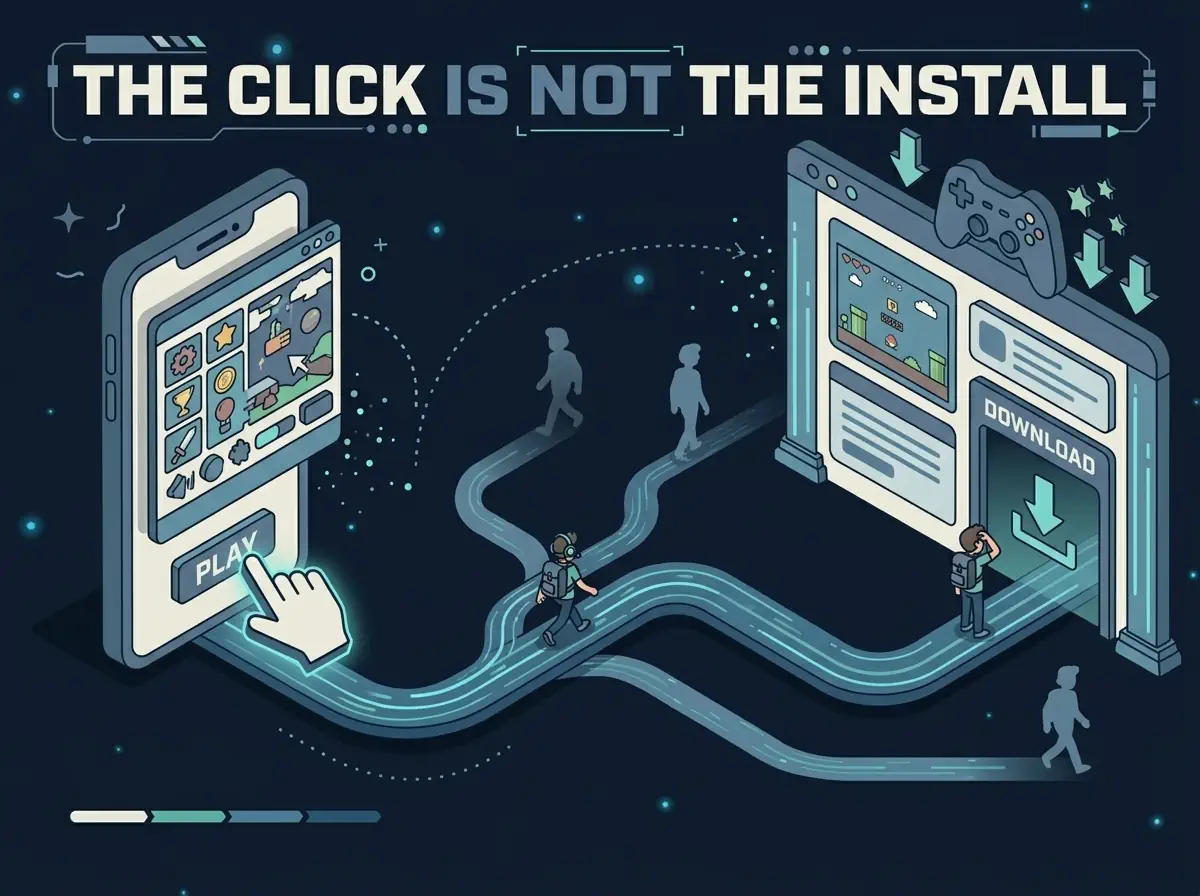
The journey does not end when a user clicks an ad.
The app store page can have a major role in the final install decision. Users may review screenshots, videos, descriptions, ratings, and other details before deciding whether to download.
The page should support the same message used in the ad.
If an ad highlights a specific game mode, that feature should be easy to find on the app store page.
Keep the information:
- Clear
- Accurate
- Current
- Easy to scan
- Consistent with the ad
A strong ad may bring users to the page, but a weak page can lose them before the install.
Build Trust Through Accurate Marketing
Trust is important in gaming marketing.
Players want to know what they are getting before they install a game. Advertising should provide accurate information and avoid claims that create false expectations.
Gaming brands should also consider relevant requirements around:
- Age restrictions
- Platform policies
- Privacy
- Terms and conditions
- Responsible gaming, where applicable
- Regional advertising rules
Marketing should support the actual product experience.
This is also part of good E-E-A-T practice. Content and campaigns should be based on accurate information, clear claims, and a real understanding of the product and audience.
Use Data to Find What Needs Fixing
Campaign data can show where users are dropping off. Strong installs but poor retention may point to an audience or expectation issue.
Review the full user journey:
- Ad impression
- Ad engagement
- Store visit
- Install
- First session
- Continued play
- Key player actions
This wider view can help marketers find problems that install data alone may hide. Campaigns should then be adjusted based on what the data shows.
How PPlayez Can Support Game Marketing
Creating effective mobile game ads requires more than making attractive graphics.
Gaming brands may need support with audience research, paid advertising, SEO, content, social media, creative planning, and campaign analysis.
PPlayez can support gaming and iGaming brands with marketing services designed around audience needs and business goals.
A strong marketing strategy should connect the different parts of the player journey instead of treating each channel as a separate task.
The focus should remain on reaching relevant users, delivering a clear message, and learning from campaign data.
The Real Goal: Better Player Acquisition
More installs do not always mean better results.
If players install your game but leave after one session, those installs have little value.
The goal is to attract players who want your game and are likely to stay. Use the right audience, clear ads, strong app store content, and regular testing.
Do not track installs alone. Watch retention and engagement to see if your mobile game ads attract the right players.
Focus on better players, not just more installs.
FAQs About Mobile Game Ads
1. What are mobile game ads?
Mobile game ads are paid ads used to promote a game and attract new players. They can appear on social media, apps, search platforms, and other digital channels.
2. What makes mobile game ads effective?
Effective ads reach the right audience, show clear gameplay, and give players a strong reason to install. The message should also match the actual game experience.
3. How can mobile game ads get more installs?
Use clear creative, test different messages, target relevant players, and improve the app store page. Track results to see which ads bring better users.
4. Should I focus only on installs?
No. Installs are only one part of campaign performance. Also track retention, engagement, and other player actions to understand the quality of your users.
5. How can I improve my mobile game ad campaigns?
Review your audience, creative, ad data, and player behavior regularly. Test new ideas and focus your budget on ads that attract players who are more likely to stay.